
Industry Insights & Technical Resources

Expert articles and technical knowledge on laboratory furniture, ESD workstations, and cleanroom design

Laboratory Design & Safety Standards

Guiding engineering and procurement teams with compliance, durability, and ergonomic insights

Cleanroom & Storage Best Practices

In-depth technical guides for specialized research and manufacturing environments

Industrial Workbench Engineering

Innovations and practical tips for ESD protection, heavy-duty workbenches, and ergonomic setups

0%

A laboratory chair may look like ordinary furniture, but its materials, grounding path, and daily condition can affect electrostatic control. The stakes are growing. The Semiconductor Industry Association reported that worldwide semiconductor sales reached $627.6 billion in 2024, based on data from the World Semiconductor Trade Statistics organization. That figure does not measure chair-related damage, but it shows the scale of the electronics sector that depends on careful handling. Small details matter.

A Laboratory ESD Chair should fit the room’s ESD-control plan, not merely carry an antistatic label. ANSI/ESD S20.20 and IEC 61340-5-1 provide recognized frameworks for controlling electrostatic discharge. They do not make every chair suitable for every workstation. Check the manufacturer’s resistance data, grounding design, upholstery, casters, and compatibility with the floor. Then consider practical needs: adjustable seat height, stable support, easy cleaning, and comfort during long sessions. A chair that grounds well but leaves a technician shifting all morning is not a good choice. Nor is a comfortable model useful if its conductive path is unclear. These trade-offs deserve a closer look. The seven tips below help buyers compare specifications, test real-world fit, and avoid relying on vague claims. Some product details can be frustratingly hard to verify. That is a reason to ask better questions, not to guess.
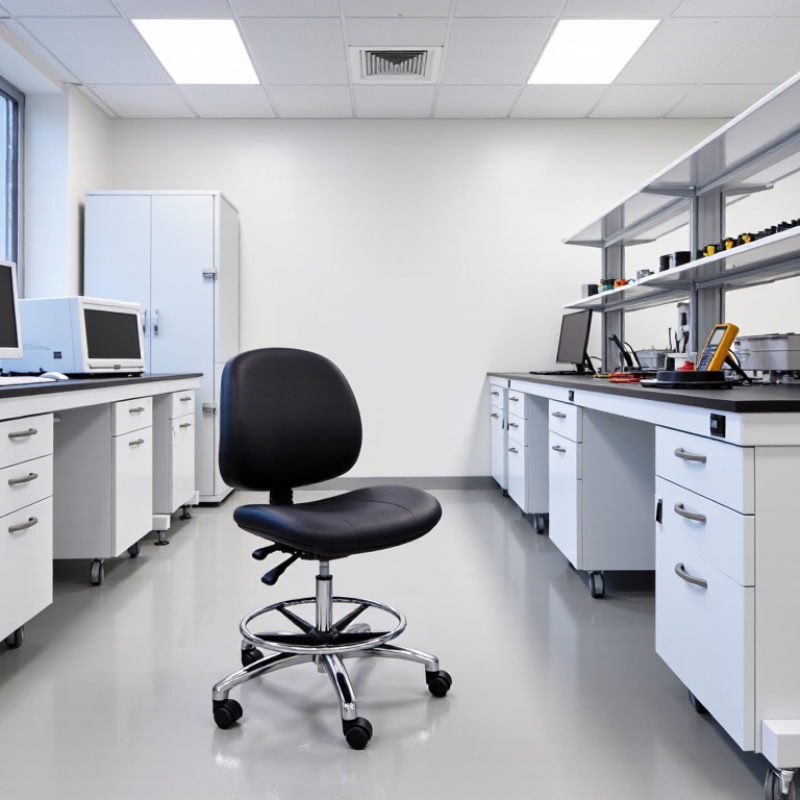
7 Tips for Choosing the Best Laboratory ESD Chair?

Understanding ESD Risks and Laboratory Requirements

Understanding ESD Risks and Laboratory Requirements

A laboratory ESD chair is part of a control system, not a stand-alone safeguard. Static can build as a worker shifts across a seat or rolls between benches. The ESD Association’s technical guidance notes that people may not feel a discharge until roughly 3,000 volts, while sensitive components can be damaged below 100 volts. That gap matters. A quiet discharge may still harm a device.

Choose seating that supports the site’s ESD control plan. ANSI/ESD S20.20 sets requirements for establishing and maintaining an electrostatic discharge control program. In practice, check the chair’s documented resistance, conductive contact points, and compatibility with the floor and grounding method. Confirm that casters or glides maintain electrical continuity during normal movement. A chair’s appearance proves little. It needs periodic testing.

Look closely at the work itself: operators may handle exposed circuit boards, weigh powders, or move trays between grounded benches. Each task can create different risks. A chair that works on one floor may not perform the same way after a floor change or cleaning. Small details matter. I would not assume a grounding chain solves every issue; worn contacts, coatings, and loose connections can interrupt the path. Record test results, inspect high-wear areas, and verify the setup with the facility’s ESD coordinator.

7 Tips for Choosing the Best Laboratory ESD Chair: Understand ESD Risks and Laboratory Requirements

How to read the chart: Common ESD material classifications distinguish conductive materials (below 106 Ω), dissipative materials (106 to below 1011 Ω), and insulative materials (1011 Ω and above). The outer ends shown are display limits, not classification boundaries. These categories describe material resistance; they are not a universal pass/fail specification for chairs.

Seven checks when choosing a chair: Confirm resistance and test method; match the chair to your facility’s grounding system; check conductive upholstery and components; verify ergonomic adjustability; assess cleaning and chemical-resistance needs; inspect stability and durability; and establish a maintenance and retesting schedule. Follow your facility’s ESD control plan for chair acceptance criteria.

Checking Grounding and Electrical Resistance

A laboratory ESD chair only works as intended when its conductive parts connect reliably to ground. Check the chair’s grounding path, including the seat, frame, and conductive casters or grounding lead. Small details matter. Dust, worn wheels, coatings, or an insulating floor mat can interrupt contact, even when the chair looks sound. Follow your facility’s ESD control plan for the required resistance limits and test method; acceptable values depend on the setup.

Use a calibrated resistance meter designed for ESD checks, and test at the specified points. Keep the chair on its normal floor surface, with the casters positioned as they are during use. Record the reading, test date, and meter identification so changes are easier to spot. Repeat measurements after replacing wheels or repairing the chair.

Not always. A single passing reading may miss an intermittent connection, so gently move the chair and check again if the result fluctuates. Temperature, humidity, and surface contamination can also affect readings.

If a value falls outside your facility’s limits, take the chair out of ESD-sensitive service until the cause is checked. It is easy to blame the chair; sometimes the floor or test setup is the real problem.

Selecting Suitable Materials and Construction

A laboratory ESD chair should use upholstery designed to dissipate static, not merely look like conductive vinyl. Check the supplier’s resistance data and compare it with your facility’s ESD control plan. Requirements can vary by workstation. Small details matter. A smooth, sealed surface wipes clean more easily, while tightly finished seams help prevent dust and liquid from settling inside. Ask whether the material tolerates the cleaners used in your lab; some finishes can dull or crack over time.

Look closely at the chair’s construction, too. A reliable grounding path depends on compatible upholstery, conductive components, and suitable casters working together. A metal base alone does not guarantee effective static control. Not always obvious. Inspect how the seat connects to the base, and look for test documentation covering the complete chair. Stable casters should roll without wobbling, but they must also suit the floor and ESD requirements. Adjustments should hold their position during a shift. In practice, I would test a sample at the actual bench before ordering several chairs. It is easy to overlook comfort until a long session makes the seat feel wrong. That can change.

Evaluating Ergonomics and Adjustability

A laboratory ESD chair should fit the person, the bench, and the task—not just look adjustable. EU-OSHA’s 2019 report on work-related musculoskeletal disorders notes that about three in five EU workers report musculoskeletal complaints. That figure covers many occupations, not laboratory chair users alone, but it underscores why fit deserves attention. A chair that feels fine during a five-minute test may disappoint during a full shift.

Check whether the seat height lets both feet rest securely, or sit comfortably on a foot ring, while the forearms meet the bench without raised shoulders. Seat depth matters too: leave a small gap behind the knees rather than pressing the seat edge into them. Adjust the backrest so it supports the lower back as you lean into routine work. Small changes count. Test the controls while wearing normal lab clothing; bulky garments can alter how the chair fits.

OSHA’s workstation guidance also emphasizes adjustable seating and support suited to the user and task. For ESD-sensitive work, confirm that the chair’s conductive components are compatible with the site’s grounding and verification procedures; ergonomic comfort does not prove electrical performance. Have users sit, reach for common tools, and turn toward nearby equipment before choosing. One detail is easy to miss: frequent height changes can loosen a setup that seemed comfortable at first. A brief trial across different tasks may reveal that.

Verifying Standards, Compatibility, and Maintenance

Verifying Standards, Compatibility, and Maintenance

Choosing a laboratory ESD chair means checking the entire grounding path, not just its conductive seat. IEC 61340-5-1:2016 addresses protection for devices rated at 100 volts HBM and 200 volts CDM or higher. These figures describe component susceptibility, not chair acceptance limits. The ESD Association’s ANSI/ESD STM12.1-2019 provides a repeatable method for evaluating seating electrostatic properties. Request test records that identify the chair configuration, measurement points, and test conditions. A certificate without those details is weak evidence.

At the bench, compare test results with your facility’s ESD control plan. Check the chair with the actual floor, footwear, and grounding connection; insulating flooring can change performance. Confirm that height adjustment clears the bench and that upholstery suits cleaning procedures. Test it in place. During routine maintenance, inspect casters, conductive contacts, seams, and fabric for wear or cleaner residue. Recheck resistance after replacing parts or changing upholstery, and keep dated records. Real rooms are messy; humidity and cleaning habits can shift results, so a single passing test should not end the review.

FAQS

How should I check whether a laboratory ESD chair is grounded?

Test the seat, frame, and conductive casters or grounding lead with a calibrated resistance meter. Record the reading, date, and meter identification.

Why can a chair fail an ESD resistance check?

Dust, worn casters, coatings, or an insulating floor mat can interrupt contact. The floor or test setup may be the problem, too.

Should I test the chair only once?

No. A single passing reading can miss an intermittent connection. Move the chair gently and retest if readings fluctuate.

What should I do if the resistance reading is outside the facility limit?

Remove the chair from ESD-sensitive service until the cause is checked. Follow the facility’s test method and limits.

What upholstery is suitable for an ESD chair?

Choose upholstery designed to dissipate static, and compare its resistance data with the facility’s ESD plan. Check whether approved cleaners can dull or crack its finish.

Does a metal chair base guarantee static control?

No. Upholstery, conductive parts, and casters must work together. Inspect their connections and request test documentation for the complete chair.

How can I check whether a chair fits the user and bench?

Sit at the bench and check foot support, relaxed shoulders, and a small gap behind the knees. Test the controls in normal lab clothing.

What should users try before several chairs are ordered?

Test a sample at the actual bench. Reach for common tools, turn toward nearby equipment, and try different tasks; a short trial can still miss discomfort.

Conclusion

Choosing the right Laboratory ESD Chair helps protect sensitive equipment while supporting safe, comfortable work. Start by assessing the laboratory’s electrostatic risks, tasks, flooring, and workstation setup. Check that the chair’s grounding design and electrical resistance are appropriate for the environment, and confirm that its materials and construction are durable, easy to clean, and suitable for routine laboratory use.

Comfort matters too: look for adjustability that supports different users and working postures, including suitable seat height and back support. Before selecting a chair, verify that its specifications meet relevant workplace requirements and that it is compatible with the laboratory’s grounding and flooring systems. Finally, consider maintenance needs, inspect conductive components regularly, and follow the manufacturer’s care guidance to help preserve performance over time. Together, these steps make it easier to choose a dependable chair that balances electrostatic control, ergonomics, and practical upkeep.

Isabella

Isabella

Isabella is a dedicated marketing professional with extensive expertise in her field, specializing in the promotion and strategic development of our company’s products. With a keen understanding of market dynamics, Isabella consistently delivers insightful and informative blog posts for our company......