
Industry Insights & Technical Resources

Expert articles and technical knowledge on laboratory furniture, ESD workstations, and cleanroom design

Laboratory Design & Safety Standards

Guiding engineering and procurement teams with compliance, durability, and ergonomic insights

Cleanroom & Storage Best Practices

In-depth technical guides for specialized research and manufacturing environments

Industrial Workbench Engineering

Innovations and practical tips for ESD protection, heavy-duty workbenches, and ergonomic setups

0%

A Cleanroom Stainless Steel Scrub Sink is a purpose-built washing station for controlled environments where hand hygiene supports contamination control. Its smooth stainless steel surfaces resist corrosion and are designed for routine cleaning. Depending on the facility, the sink may include hands-free controls, a backsplash, and plumbing configured to limit splash. Details matter. A lever handle, awkward basin edge, or hard-to-reach joint can complicate cleaning and daily use. The right configuration depends on the room’s procedures, available space, and the number of people using it.

This guide explains how scrub sinks are used, which design features deserve attention, and what to consider when selecting a unit. Stainless steel grade, basin depth, faucet placement, and installation quality can all affect durability and usability. For example, a basin that is too shallow may send water onto the surrounding floor, while poorly finished seams can collect residue. Yet a sink alone does not make a room clean. It must fit into established hygiene procedures and be maintained as intended. Product specifications should be checked against the facility’s requirements, rather than assumed to suit every cleanroom. That distinction is easy to overlook. Careful selection helps teams support consistent handwashing without treating equipment as a substitute for sound practice.
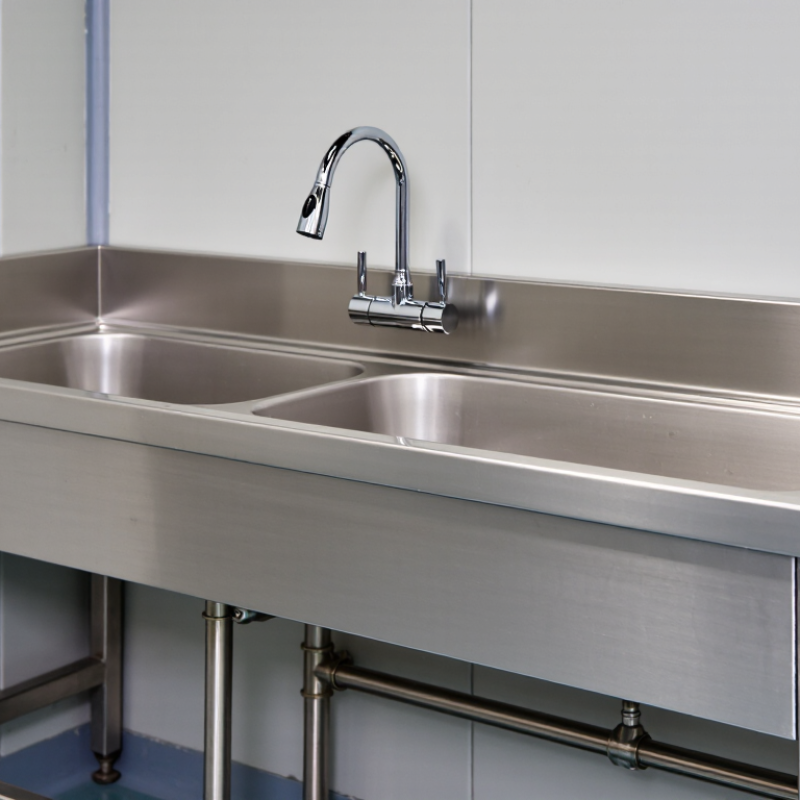
What Is a Cleanroom Stainless Steel Scrub Sink?

Definition and Purpose of a Cleanroom Stainless Steel Scrub Sink

A cleanroom stainless steel scrub sink is a handwashing fixture designed for controlled environments, often near a gowning area or cleanroom entrance. Its purpose is to support hand hygiene before personnel handle garments, equipment, or materials. Stainless steel offers a smooth, durable surface that is practical to clean. Hands-free taps and carefully finished joints can reduce touchpoints and dirt traps. Small details matter.

The sink does not make a room cleanroom-compliant. ISO 14644-1:2015 sets airborne particle limits; for particles 0.5 micrometres and larger, the limit is 3,520 per cubic metre for ISO Class 5 and 352,000 for ISO Class 7. These figures describe air cleanliness, not sink performance. The FDA’s 2004 aseptic-processing guidance advises against placing handwashing sinks in ISO Class 5 areas. Placement should therefore follow the facility’s contamination-control plan and applicable procedures. A sink can look spotless yet be poorly placed; that is easy to underestimate. It also needs suitable drainage, splash control, and a cleaning routine that does not disrupt nearby operations.

Key Components and Design Features

A cleanroom stainless steel scrub sink supports controlled handwashing while limiting places where soil and moisture can collect. Its main components include one or more deep bowls, a backsplash, drain assemblies, and hands-free controls. Depending on the room, controls may use knees, elbows, or sensors, so clean hands do not need to touch faucet handles. A metered soap dispenser and separate rinse outlet can sit within easy reach. Small details matter.

The basin is commonly made from corrosion-resistant stainless steel, with smooth welds and rounded internal corners that simplify wiping. A sloped bowl and well-positioned drain help water clear instead of pooling near the user's wrists. The backsplash protects the wall, while sealed joints reduce hidden gaps. Still, a seamless appearance alone does not guarantee easy cleaning; finish quality and access around plumbing deserve inspection. Bowl spacing, faucet reach, and splash control also affect staff comfort. Even a well-made unit can frustrate users if the faucet arc sends water onto the floor.

What Is a Cleanroom Stainless Steel Scrub Sink? – Key Components and Design Features

Component or Feature Purpose Common Cleanroom Design Considerations What to Check
Stainless steel construction Provides a durable, corrosion-resistant surface for routine handwashing and cleaning. Stainless steel grade and finish should suit the cleaning agents, moisture, and operating conditions in the facility. Smooth surfaces are generally easier to clean. Confirm material grade, surface finish, and compatibility with approved cleaning and disinfecting products.
Basin and backsplash Contains water and helps protect the surrounding wall from splashes. Rounded internal corners and well-finished joints can reduce hard-to-clean crevices. Basin dimensions should accommodate the intended handwashing procedure. Inspect for smooth transitions, sound welds, adequate bowl depth, and a backsplash suited to the installation.
Hands-free faucet control Allows users to operate water without touching a conventional handle with washed hands. Controls may use sensors, foot pedals, or other hands-free mechanisms. The selected method should fit the workflow and be maintainable in the cleanroom. Verify activation reliability, accessible maintenance, and whether the outlet and controls meet the facility’s hygiene requirements.
Water outlet and flow Delivers water to the basin for handwashing. Outlet placement should limit splashing and make the basin practical to use. Water quality and temperature requirements depend on the facility’s process and plumbing design. Check outlet position, flow behavior, connection requirements, and any site-specific water-quality controls.
Drain and plumbing connections Removes used water from the basin and connects the sink to the building’s drainage system. Drain components should be accessible for cleaning and maintenance. Plumbing penetrations and surrounding interfaces should be sealed appropriately for the room. Confirm drain compatibility, leak-free connections, service access, and details for sealing wall or floor penetrations.
Soap and hand-drying provisions Supports the handwashing sequence with soap and an appropriate drying method. Dispensers and drying provisions may be integrated or installed nearby. Their placement should support workflow without creating unnecessary obstructions. Check refill access, cleanability, dispenser operation, and consistency with the site’s gowning and hygiene procedures.
Mounting and support Secures the sink and transfers its load to the wall, floor, or supporting structure. Wall-mounted and floor-supported arrangements have different structural and cleaning-access needs. The installation should avoid inaccessible gaps where practical. Verify load support, anchoring, installation clearances, and seal details against the approved room layout.
Cleanability and room integration Helps the sink fit into the room’s cleaning, maintenance, and personnel-flow practices. Simple geometry, accessible surfaces, and properly finished interfaces can make routine cleaning easier. The sink itself does not determine a room’s cleanroom classification. Review the sink with the facility’s cleaning procedures, room layout, utilities, and applicable project requirements.

Stainless Steel Grades and Construction Standards

What Is a Cleanroom Stainless Steel Scrub Sink?

Stainless Steel Grades and Construction Standards

A cleanroom scrub sink must tolerate repeated cleaning while avoiding surfaces that trap soil or moisture. Type 304L stainless steel is a common choice for general environments; Type 316L adds molybdenum, which improves resistance to chloride exposure. ASTM A240/A240M covers stainless steel plate, sheet, and strip used in fabrication. The better grade depends on cleaning chemicals and water quality, not appearance alone. 316L is not automatically necessary.

Construction details matter. Look for continuous, smooth welds, rounded internal corners, and carefully finished joints around the basin and backsplash. Specify the surface finish and how it will be verified; “polished” alone is vague. ASTM A967/A967M describes chemical passivation treatments for stainless steel parts. ISO 14644-1:2015 sets airborne particle limits for cleanroom classes: Class 7 allows up to 352,000 particles per cubic metre at 0.5 μm and larger, while Class 8 allows 3,520,000. These are room limits, not sink requirements, but they show why cleanable details matter.

Tips: Check the sink’s welds, drain area, and chemical compatibility before purchase. Ask for material certification and a defined finish specification. Details matter. Even a well-built sink can disappoint if its joints are difficult to inspect.

How the Sink Supports Cleanroom Handwashing Procedures

What Is a Cleanroom Stainless Steel Scrub Sink?

A cleanroom stainless steel scrub sink is a handwashing station for controlled environments, where routine hygiene helps limit contamination. Its smooth, nonporous surfaces are easier to clean than scratched or absorbent materials. The basin, backsplash, and seams should be checked for residue or damage. Small details matter. Rounded corners and accessible controls can make operation more consistent. Exact features depend on the facility’s gowning process.

During handwashing, staff follow the site’s written procedure. They wet their hands and, when required, their forearms. They apply the specified cleanser and scrub for the time stated in the procedure. Water should rinse away soap without splashing onto clean clothing or nearby surfaces. Hands are dried using the approved method before gloves or other protective garments are donned. Touch-free taps can reduce contact points, but they do not replace correct technique or regular sink cleaning. That distinction is easy to overlook. Even a well-designed basin can become a weak point if drains, splash zones, or dispensers are neglected.

What Is a Cleanroom Stainless Steel Scrub Sink?

How the sink supports cleanroom handwashing procedures

How to read this chart: The CDC recommends scrubbing hands for at least 20 seconds. A cleanroom stainless steel scrub sink provides a dedicated, cleanable station for handwashing; the sink itself does not determine the recommended scrub time.

Source: U.S. Centers for Disease Control and Prevention (CDC), handwashing guidance.

Cleaning, Maintenance, and Common Applications

What Is a Cleanroom Stainless Steel Scrub Sink?

A cleanroom stainless steel scrub sink supports handwashing and gowning routines in controlled environments. It is commonly installed near cleanroom entrances, changing areas, and production spaces in pharmaceutical, biotechnology, medical-device, and electronics facilities. Its smooth surfaces are designed to be easier to clean than porous finishes, but the sink does not make a room clean by itself.

Follow the facility’s cleaning schedule and approved procedures. Wipe the basin, backsplash, taps, handles, and surrounding ledges with a compatible detergent, then rinse and dry them with lint-free materials. Use disinfectants only as specified by the site procedure and equipment guidance. Avoid abrasive pads and unapproved cleaners; some chemicals, including chloride-rich products, can damage stainless steel over time. Small details matter. Check drains and joints for residue, leaks, or corrosion, and keep soap and sanitizer dispensers clean. It is easy to assume stainless steel is maintenance-free; it is not. A missed water spot may be minor, but recurring residue deserves attention and follow-up. Maintenance records can help teams spot patterns before a small issue interrupts routine use.

FAQS

What is a cleanroom stainless steel scrub sink?

It is a handwashing station for controlled environments, often near a gowning area or entrance. Its smooth steel surfaces are practical to clean.

Does the sink make a room cleanroom-compliant?

No. Room cleanliness depends on more than a sink, including airborne particle levels and facility procedures. A spotless basin can still be poorly placed.

Where should the sink be installed?

Follow the facility’s contamination-control plan. Keep the sink outside areas where handwashing fixtures are unsuitable, and consider drainage and nearby operations.

Which design features help with cleaning?

Smooth welds, rounded corners, sealed joints, and accessible plumbing can make wiping easier. Looks can deceive; inspect the finish closely.

Why are hands-free controls useful?

Knee, elbow, or sensor controls can reduce contact with faucet handles. They do not replace proper handwashing or routine cleaning.

How should staff wash their hands at the sink?

Follow the written site procedure. Wet hands and forearms when required, apply the specified cleanser, scrub for the stated time, then rinse.

How can the sink reduce splashing?

A well-positioned drain, sloped bowl, and suitable faucet reach help water clear without pooling. Poor faucet reach may leave water on the floor.

What should be checked during routine cleaning?

Inspect bowls, seams, drains, dispensers, and splash zones for residue or damage. Small details matter. Dry hands using the approved method before dressing.

Conclusion

A Cleanroom Stainless Steel Scrub Sink is a purpose-built handwashing station designed to support hygiene practices in controlled environments. Its layout can include hands-free faucets, deep basins, splash protection, and accessible controls to help users wash their hands while limiting unnecessary contact with surfaces. Smooth, durable construction and carefully finished joints make the sink easier to clean and help reduce places where residue may collect.

The choice of stainless steel grade and construction should suit the room’s cleanliness requirements, expected use, and cleaning routine. During handwashing procedures, the sink provides a dedicated, convenient place for staff to prepare before entering or working in a cleanroom. Regular cleaning, inspection, and maintenance help preserve its condition and function. These sinks are commonly used in laboratories, pharmaceutical production areas, healthcare facilities, and other environments where consistent hand hygiene is important.

Liam

Liam

Liam is a dedicated marketing professional with a profound expertise in our company's offerings. With a keen understanding of market trends and consumer needs, he plays a pivotal role in shaping our communication strategy. Liam regularly updates our corporate blog, where he shares insights that not......