
Industry Insights & Technical Resources

Expert articles and technical knowledge on laboratory furniture, ESD workstations, and cleanroom design

Laboratory Design & Safety Standards

Guiding engineering and procurement teams with compliance, durability, and ergonomic insights

Cleanroom & Storage Best Practices

In-depth technical guides for specialized research and manufacturing environments

Industrial Workbench Engineering

Innovations and practical tips for ESD protection, heavy-duty workbenches, and ergonomic setups

0%

Choosing a Stainless Steel Fume Hood is not simply a matter of comparing polished cabinets and attractive specifications. Laboratory safety depends on airflow stability, corrosion resistance, construction quality, service support, and correct installation. A hood may look impressive yet perform poorly if its baffles, sash, or exhaust system are unsuitable.

James Kaufman, founder of Labconco, once described the fume hood as “the most important piece of safety equipment in the laboratory.” That practical observation still matters. Stainless steel interiors must withstand acids, solvents, moisture, and repeated cleaning. Weld quality matters too. Tiny surface defects can become difficult corrosion points over time.

This guide examines the Top 10 Stainless Steel Fume Hood Manufacturers Worldwide through a practical and evidence-based lens. It considers product engineering, airflow testing, material grades, customization, user feedback, certifications, technical documentation, and after-sales support. Manufacturer claims are useful, but they should not be accepted without inspection.

Real laboratories rarely operate under perfect conditions. Space limits, unusual chemicals, maintenance delays, and changing workloads can affect performance. That is why a global ranking cannot serve every facility equally. It offers direction, not a final purchase decision.

Some manufacturers lead in heavy-duty chemical applications. Others focus on modular laboratory systems, energy efficiency, or rapid customization. The strongest companies usually combine reliable fabrication with clear validation records and responsive technical teams. Still, even experienced buyers can overlook installation details. This review aims to make those details visible, while acknowledging that product performance depends on the whole ventilation system, not the enclosure alone.
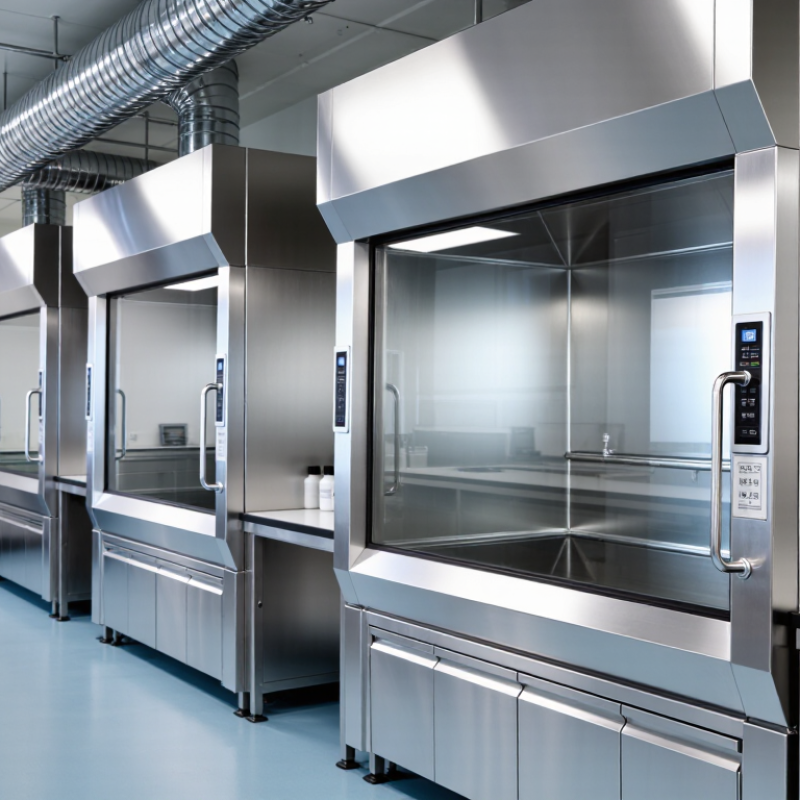
Top 10 Stainless Steel Fume Hood Manufacturers Worldwide

Definition and Applications of Stainless Steel Fume Hoods

Stainless steel fume hoods are ventilated laboratory enclosures designed to capture hazardous vapors, dust, and aerosols at their source. A front sash helps separate workers from experiments while an exhaust system removes contaminated air. Stainless steel offers a smooth, durable surface that resists moisture, staining, and many laboratory chemicals. Grade selection still matters. For severe acid work, corrosion-resistant steel may perform better than ordinary stainless steel. A hood is not a complete safety system.

These hoods serve chemical laboratories, hospitals, research centers, food testing rooms, and industrial quality-control areas. Common tasks include solvent handling, acid digestion, sample preparation, and heating volatile materials. Their performance depends on stable airflow, correct installation, regular inspection, and suitable ductwork. Experienced technicians should verify face velocity and check alarms after commissioning. Poor airflow can create a false sense of protection. I have seen clean surfaces hide blocked baffles and neglected filters.

Tips: Keep containers away from the hood entrance. Work at least several inches inside the chamber. Do not use the hood for storage. Wipe spills promptly with compatible materials, and inspect seams for corrosion. Choose a manufacturer that provides airflow data, material specifications, maintenance guidance, and documented performance testing. Local safety requirements should guide the final design, because one configuration cannot suit every application.

Criteria for Ranking Global Fume Hood Manufacturers

Top 10 Stainless Steel Fume Hood Manufacturers Worldwide
Ranking global stainless steel fume hood manufacturers requires more than comparing product catalogs. Safety performance should lead the evaluation. ASHRAE Standard 110-2016 defines tracer-gas testing for containment, while SEFA 1 provides practical laboratory fume hood performance guidance. Manufacturers should publish test conditions, face velocity, sash position, and measured leakage results. Without these details, a “high-performance” claim remains difficult to verify.

Material quality also matters. Stainless steel grades, weld consistency, surface finish, and chemical resistance should be checked against the intended laboratory environment. A reliable ranking should examine independent certification, factory quality controls, installation records, and after-sales testing.

The U.S. Department of Energy reports that laboratories may consume five to ten times more energy than typical office buildings. Therefore, ranking criteria should include variable-air-volume compatibility, sash management, and documented airflow stability. Energy savings are useful, but containment must not be sacrificed.

Service evidence separates experienced manufacturers from polished newcomers. Review warranty terms, commissioning procedures, replacement-part availability, and technician training. The World Health Organization’s Laboratory Biosafety Manual emphasizes risk assessment and effective engineering controls, supporting a performance-based ranking approach.

Still, rankings can mislead. A manufacturer may perform well in one climate, building system, or chemical application but poorly in another. Local verification is essential. Small omissions matter.

Profiles of the Top 10 Stainless Steel Fume Hood Manufacturers

Top 10 Stainless Steel Fume Hood Manufacturers Worldwide

Profiles of the Top 10 Stainless Steel Fume Hood Manufacturers

The leading ten manufacturers differ in design depth, testing, and regional service. Some focus on laboratory-grade stainless steel interiors. Others specialize in modular systems for universities, hospitals, and industrial laboratories. Their strongest profiles usually include airflow testing, corrosion-resistant welding, and adjustable exhaust controls. Build quality matters.

A 2024 Fortune Business Insights report valued the global laboratory equipment market at about USD 16.39 billion. It projects growth to nearly USD 23.95 billion by 2032. The report covers broader equipment categories, not stainless steel fume hoods alone. This limitation deserves attention. Within the top ten profiles, several manufacturers support custom dimensions, sash monitoring, and low-flow operation. Others offer standard widths, faster delivery, and simpler maintenance. Independent testing under ASHRAE 110 remains a useful comparison point. Product brochures alone are not enough.

Tips: Check the certificate, airflow data, and weld finish before buying. Ask for recent project references. Inspect the baffle area closely. Small gaps can become costly problems. Also compare replacement filters, fan compatibility, and service response times. Price can mislead. A lower quotation may exclude installation, balancing, or commissioning. Performance may vary after years of chemical exposure, even with quality stainless steel. That part is often underexplained.

Top 10 Stainless Steel Fume Hood Manufacturers Worldwide

Stainless Steel Grade Reference for Laboratory Fume Hood Construction

The chart compares representative chromium and nickel percentages for stainless-steel grades commonly considered in laboratory equipment specifications. Values show the midpoint of typical ASTM material composition ranges; actual procurement specifications should be confirmed with the manufacturer and project requirements.

Product Features, Safety Standards, and Customization Options

Selecting the top 10 stainless steel fume hood manufacturers worldwide requires more than comparing price or polished catalogs. Product quality begins with corrosion-resistant stainless steel, fully welded seams, smooth internal surfaces, and secure, adjustable sashes. These details affect cleaning, airflow stability, and long-term laboratory safety.

Reliable manufacturers should provide test data for face velocity, containment, noise, and airflow recovery. ASHRAE 110, EN 14175, and applicable local requirements offer useful benchmarks. However, compliance claims need verification. Ask for current test reports, material grades, factory inspection records, and maintenance guidance. A certification logo alone is not enough. Small gaps matter.

Customization often separates a suitable hood from an expensive mistake. Options may include walk-in or benchtop designs, variable air volume control, explosion-resistant electrical components, service fixtures, lighting, alarm systems, and specialized work surfaces. Stainless steel grades should match the chemicals and cleaning agents used in the facility. A good supplier checks room size, exhaust capacity, user workflow, and installation conditions before recommending equipment. That step is easy to skip.

No ranking is perfect. Manufacturer performance can change by region, project team, and after-sales support. Buyers should compare warranty terms, spare-part availability, commissioning services, and response times. Requesting a site-specific airflow review is wise. It may reveal that the largest hood is not the safest choice.

Global Distribution, Support Services, and Buyer Considerations

Top 10 Stainless Steel Fume Hood Manufacturers Worldwide

Global distribution often separates a reliable manufacturer from a merely attractive supplier. The top ten manufacturers typically serve laboratories through regional warehouses, trained distributors, and documented export procedures. Buyers should check delivery coverage before comparing prices. A hood shipped quickly but supported poorly can disrupt an entire laboratory schedule.

Support services deserve equal attention. Experienced manufacturers provide installation guidance, airflow testing, replacement parts, and responsive technical assistance. Ask whether engineers can troubleshoot remotely or visit the site. Request service response times in writing. Some suppliers describe global support broadly, yet local help may be limited. That gap matters.

Tips: Confirm the hood’s airflow range, steel grade, noise level, certification documents, and spare-part availability. Review real project references in climates similar to yours. Inspect warranty exclusions carefully. A low purchase price may hide costly maintenance. Also, measure doorways and elevator capacity before ordering; this simple step is often missed. When comparing the top ten, consider laboratory workflow, chemical use, shipping conditions, and future expansion. The best choice is not always the most advertised one. It should fit your technicians, facility, and service expectations. Teams sometimes overlook user training, and that mistake can weaken otherwise excellent equipment performance.

Top 10 Stainless Steel Fume Hood Manufacturers Worldwide - Global Distribution, Support Services, and Buyer Considerations

Anonymized global comparison of representative manufacturer profiles. Company names and brand-specific data are intentionally omitted.

Rank Manufacturer Profile Primary Manufacturing Region Typical Stainless Steel Fume Hood Portfolio Common Standards and Documentation Global Distribution Model Typical Support Services Indicative Lead-Time Category Key Buyer Verification Points
1 Profile A
Large international supplier
Western Europe Standard, ducted, educational, and chemical-resistant stainless steel hoods; optional variable-air-volume configurations. CE-related technical documentation where applicable; EN 14175 testing commonly requested for European laboratory installations; ISO 9001 may be available. Direct sales supported by authorized distributors and laboratory-equipment integrators. Application engineering, airflow commissioning guidance, replacement components, and scheduled maintenance support. Standard: 8–16 weeks
Custom: 16–24 weeks
Request the exact EN 14175 test scope, face-velocity data, fan compatibility, and local service coverage.
2 Profile B
High-volume exporter
East Asia Stainless steel worktop hoods, walk-in units, mobile laboratory hoods, and modular exhaust systems. Product drawings, material certificates, electrical documents, and country-specific conformity files may be supplied by project. Export distributors, OEM arrangements, regional agents, and project-based container shipments. Remote design review, installation manuals, video support, and spare-part shipment. Standard: 6–12 weeks
Custom: 12–20 weeks
Confirm stainless steel grade, weld quality, packing method, factory acceptance testing, and responsibility for local installation.
3 Profile C
North American project supplier
North America Heavy-duty chemical hoods, low-flow designs, perchloric-acid-compatible options, and laboratory casework systems. ASHRAE guidance and applicable local codes are commonly considered; SEFA-related laboratory furniture specifications may be requested. Regional sales offices, laboratory contractors, and certified installation partners. Site surveys, exhaust-system coordination, balancing assistance, warranty service, and field repairs. Standard: 10–18 weeks
Custom: 18–28 weeks
Verify seismic requirements, electrical listing, exhaust-air demand, fire-suppression interfaces, and field-service response time.
4 Profile D
Specialty laboratory manufacturer
Northern Europe Low-energy hoods, corrosion-resistant stainless steel interiors, radioisotope configurations, and cleanroom-compatible units. EN 14175 documentation may cover containment, airflow, visibility, and alarm performance; project risk assessments are commonly included. Direct specification support with regional laboratory construction partners. Airflow modeling, risk-based configuration, commissioning support, operator training, and preventive-maintenance plans. Standard: 12–20 weeks
Custom: 20–30 weeks
Compare measured containment performance, standby-energy claims, alarm logic, noise data, and maintenance access.
5 Profile E
Asia-Pacific regional supplier
Southeast Asia Compact stainless steel hoods, teaching-laboratory models, ducted units, and locally adapted laboratory furniture. Material specifications, electrical test records, factory inspection documents, and local building-code compliance documents. Regional distributors, laboratory contractors, and direct project quotations. Layout consultation, installation coordination, user training, and locally stocked consumables where available. Standard: 6–14 weeks
Custom: 14–22 weeks
Check local spare-parts inventory, corrosion resistance for humid climates, voltage compatibility, and installation warranty terms.
6 Profile F
OEM and private-label specialist
East Asia Configurable stainless steel hood shells, custom dimensions, laboratory benches, exhaust plenums, and private-label assemblies. Inspection reports, packing lists, drawings, and certificates can typically be prepared against the buyer’s specification. OEM export programs, freight-forwarder coordination, and distributor-led sales. CAD approval cycles, sample production, quality inspections, and remote troubleshooting. Prototype: 8–14 weeks
Production: 10–18 weeks
Define inspection criteria in the purchase contract and verify weld inspection, surface finish, packaging, and change-control procedures.
7 Profile G
Industrial and research specialist
Central Europe Industrial laboratory hoods, high-temperature applications, solvent-handling units, and reinforced stainless steel enclosures. Application-specific technical files, risk assessments, ventilation calculations, and relevant European conformity documents. Industrial distributors, engineering firms, and direct sales for complex projects. Process consultation, hazardous-material suitability review, commissioning, and service-contract options. Standard: 12–18 weeks
Custom: 18–32 weeks
Confirm chemical compatibility, thermal limits, fire-risk controls, exhaust-material suitability, and emergency-shutdown integration.
8 Profile H
Modular laboratory systems provider
Western Europe Modular fume hoods, stainless steel casework, mobile bases, service panels, and coordinated laboratory fit-out systems. Project drawings, installation instructions, airflow data, material declarations, and applicable regional conformity documentation. Turnkey laboratory contractors, design consultants, and regional distribution networks. Space planning, BIM or CAD coordination, installation supervision, commissioning, and lifecycle service. Standard: 10–18 weeks
Project: 18–30 weeks
Evaluate interface compatibility with existing utilities, future reconfiguration options, floor-loading needs, and service-level agreements.
9 Profile I
Value-focused global exporter
South Asia Basic ducted hoods, stainless steel workstations, educational models, and customized laboratory enclosures. Commercial inspection documents, stainless steel declarations, product drawings, and buyer-specified testing records. Export agents, importers, project contractors, and quotation-based international sales. Pre-shipment inspection coordination, installation documentation, remote support, and replacement-part supply. Standard: 8–16 weeks
Custom: 16–24 weeks
Use third-party inspection when appropriate and verify airflow uniformity, dimensional tolerances, surface finishing, and export packaging.
10 Profile J
Custom engineering manufacturer
Oceania and Asia-Pacific Custom stainless steel hoods for universities, hospitals, pharmaceutical laboratories, and specialist research facilities. Project-specific engineering calculations, local electrical documentation, ventilation coordination, and commissioning records. Direct project management, local engineering consultants, and specialist laboratory contractors. Site measurement, custom fabrication, installation coordination, compliance documentation, and post-installation servicing. Custom: 16–30 weeks
Complex projects: 30+ weeks
Confirm engineering responsibility, local code compliance, access constraints, maintenance intervals, and long-term service availability.
Buyer note: Lead times, certifications, distribution arrangements, and service coverage vary by country and project scope. Buyers should obtain current manufacturer documentation, independent performance-test results, written warranty terms, and a local installation and commissioning plan before purchase.

FAQS

What is a stainless steel fume hood?

It is a ventilated enclosure that captures vapors, dust, and aerosols near their source. A front sash separates workers from experiments.

Where are stainless steel fume hoods commonly used?

They support chemical laboratories, hospitals, research centers, food testing rooms, and industrial quality-control areas.

What laboratory tasks require a fume hood?

Common tasks include solvent handling, acid digestion, sample preparation, and heating volatile materials. Keep containers several inches inside.

Is stainless steel suitable for every chemical application?

Not always. Severe acid work may require a more corrosion-resistant grade than ordinary stainless steel.

What determines a hood’s safety performance?

Stable airflow, proper installation, suitable ductwork, regular inspection, and tested alarms are essential. A clean surface proves little.

How should users work inside a fume hood?

Keep containers away from the entrance. Work well inside the chamber. Do not use it for storage.

What should buyers check before selecting a manufacturer?

Review airflow data, steel grade, surface finish, chemical resistance, testing records, warranty terms, and replacement-part availability.

How can buyers compare global suppliers fairly?

Examine local service coverage, installation support, technician training, delivery procedures, and real project references. Marketing claims may mislead.

Can energy-saving airflow systems reduce safety?

They can, if containment is sacrificed. Variable-air-volume systems need documented airflow stability and proper sash management.

What small details are often overlooked during installation?

Measure doorways and elevator capacity before delivery. Confirm spare parts, noise levels, certification documents, and written service response times.

Conclusion

This article presents a practical overview of the global Stainless Steel Fume Hood market, beginning with the equipment’s definition and its applications in laboratories, healthcare facilities, educational institutions, and industrial research environments. It explains how stainless steel construction supports durability, corrosion resistance, hygiene, and reliable containment of hazardous fumes, vapors, and particulates. The ranking criteria focus on product quality, engineering capability, safety performance, certifications, innovation, customization, manufacturing consistency, and customer service rather than brand popularity alone.

The article then profiles ten leading types of international manufacturers without emphasizing brand names, highlighting their product features, ventilation designs, monitoring systems, ergonomic options, and ability to meet different laboratory requirements. It also discusses safety standards, installation considerations, global distribution networks, technical support, maintenance, training, warranty coverage, and spare-parts availability. Finally, buyers are guided to compare workspace dimensions, airflow control, material specifications, energy efficiency, compliance documentation, customization needs, total cost of ownership, and after-sales support before selecting a suitable supplier.

Isabella

Isabella

Isabella is a dedicated marketing professional with extensive expertise in her field, specializing in the promotion and strategic development of our company’s products. With a keen understanding of market dynamics, Isabella consistently delivers insightful and informative blog posts for our company......