
Expert articles and technical knowledge on laboratory furniture, ESD workstations, and cleanroom design
Guiding engineering and procurement teams with compliance, durability, and ergonomic insights
In-depth technical guides for specialized research and manufacturing environments
Innovations and practical tips for ESD protection, heavy-duty workbenches, and ergonomic setups
A Cleanroom Cross-Over Bench is a simple piece of furniture with an important job: it marks the boundary between a changing area and a cleaner space. Staff sit on one side, remove or change footwear, then swing their legs across the bench before entering. The bench helps separate street-side and cleanroom-side footwear. It does not clean shoes or remove every particle. That distinction matters.
In practice, the bench may be made from stainless steel or another smooth, cleanable material. Its height, length, and position should suit the room layout and the people using it. A bench placed too close to a door can interrupt traffic. One that is difficult to clean may become a weak point in an otherwise careful routine. Small details count.
This guide explains what a crossover bench is, how it works, and what to consider when selecting and maintaining one. The right choice depends on the cleanroom’s workflow, gowning procedure, available space, and cleaning requirements. There is no single design for every facility. Even a well-chosen bench cannot replace staff training or established contamination-control practices. That is worth remembering. A practical assessment of the entry area can reveal problems that product specifications alone may miss.
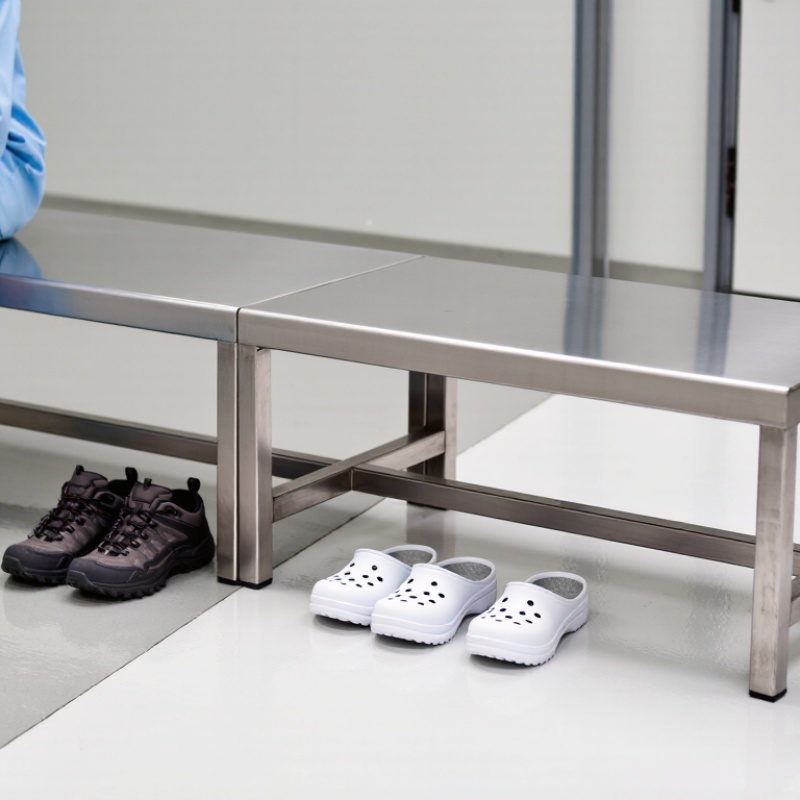
A cleanroom crossover bench is a fixed seating barrier between a lower-grade changing area and a cleaner room. Staff sit on its solid top, lift one leg across, then bring the other over without letting street-side footwear touch the clean floor. The bench does not clean air or replace gowning. It helps make the boundary visible and repeatable. Small details matter: sealed joints, smooth, non-shedding surfaces, and enough depth to keep shoes apart. It sounds simple. It is easy to misuse.
ISO 14644-1:2015 sets airborne particle concentration limits for cleanroom classes. For particles at least 0.5 micrometres in size, the limit is 3,520 per cubic metre in ISO Class 5 and 352,000 in ISO Class 7. These figures describe air cleanliness, not bench performance, but they show why traffic control and validated cleaning routines matter. A poorly placed bench can cause crowding; unclear clean-side markings can lead to footwear crossing errors. Teams should choose dimensions suited to their gowning sequence and observe actual staff transitions before fixing the layout.
Tips: Mark both sides clearly. Keep the bench clear, inspect joints, and clean it according to the site’s approved procedure. Repeated crossing errors may indicate a layout problem, not careless staff.
A cleanroom crossover bench marks the change between a less controlled area and a cleaner space. Its barrier separates the two sides, while the seat gives personnel a stable place to change footwear. The design supports a controlled routine; it does not replace cleaning procedures or gowning rules.
The barrier is usually positioned so people sit on one side and move their legs over it without stepping across the floor boundary. Its height and length should suit the room layout and the movement required. A barrier that is too low may be awkward to cross, while one that blocks access can disrupt traffic. The exact fit matters.
Seating needs to feel steady and leave enough room for a deliberate change of shoes. Smooth, durable surfaces and accessible joints make routine wiping easier. Rounded edges can reduce snags on clothing, and secure mounting helps prevent movement during use. Small details matter. A bench may look simple, but a cramped seat can encourage rushed movement. It is worth checking the layout with the people who use it, since ideal drawings do not always match daily habits.
A cleanroom crossover bench marks the point where people change footwear or adjust protective clothing between areas. Its main role is to make the boundary visible and guide movement, not simply provide a place to sit. Staff usually sit on one side, lift one leg across the bench, and change footwear without letting clean-side shoes touch the floor outside. The bench creates a physical pause. That boundary matters.
The setup works best when the room layout and written procedures support it. Keep the two sides clear, and place clean footwear where staff can reach it without leaning across the bench. A marked floor line can clarify where shoes and supplies belong. Small details count. The bench alone does not control airflow or prevent particles from moving between rooms. That distinction is easy to overlook. An operator may still cross the boundary incorrectly, especially during a rushed shift, so training and observation remain important. A narrow bench can also feel awkward for some users; that practical issue deserves attention when choosing its position and size. The handoff is controlled by the bench, the procedure, and the people using both.
What Is a Cleanroom Crossover Bench?
Where Crossover Benches Are Used
A cleanroom crossover bench is a fixed or movable seat placed between areas with different cleanliness requirements. Staff sit on one side, change footwear or protective garments, then swing their legs across without placing street shoes on the clean side. The bench creates a visible transition point. It does not clean shoes or replace gowning procedures.
Crossover benches are commonly used in changing rooms that lead into pharmaceutical, medical-device, electronics, and other controlled production areas. They may also sit between a corridor and a cleanroom entrance, where workers change dedicated footwear before entering. In practice, placement matters: the bench should match the room layout, traffic flow, cleaning routine, and facility procedures. A narrow doorway can make the crossing awkward. Small detail, real consequence. Materials and joints should tolerate the cleaning agents used on site, and the seat should be easy to inspect. A bench alone cannot control contamination; staff still need clear instructions and consistent habits. Teams sometimes expect too much from this simple fixture, and that is worth reconsidering.
A crossover bench is installed at a cleanroom boundary to transfer items such as tools, components, and supplies between adjacent areas. It can help reduce door traffic, but it does not clean or sterilize items or determine the room’s ISO classification.
Context: The chart shows the maximum airborne particle concentration for ISO Classes 5–8 at particle sizes of 0.5 μm and larger. These are room classification limits, not crossover-bench performance ratings. Source: ISO 14644-1.
What Is a Cleanroom Crossover Bench?
What to Consider When Selecting and Maintaining One
A cleanroom crossover bench marks the change between gowning and clean areas. Choosing one starts with the room’s classification and the actual gowning routine. Measure the available space, door swing, and walking path before ordering. A bench that narrows the route can disrupt traffic and make gowning awkward. ISO 14644-1:2015 sets airborne particle limits: for particles 0.5 micrometres and larger, ISO Class 5 allows 3,520 particles per cubic metre, while ISO Class 7 allows 352,000. These are room limits, not bench ratings. Worth checking twice.
Select a smooth, non-shedding surface that tolerates the cleaning agents used at your site. Inspect seams, corners, and supports; hard-to-reach joints can collect residue. The bench should be stable, easy to clean underneath, and sized for the number of people changing shifts. Details matter. A polished finish alone does not prove cleanroom suitability, so confirm material compatibility and cleaning instructions with your contamination-control team.
Set a maintenance schedule around risk and use, rather than relying on appearance. ISO 14644-2:2015 provides a framework for monitoring cleanroom performance; it does not replace local cleaning procedures. Record inspections, check fasteners and feet, and look for corrosion, scratches, or loosened joints. Use approved wipes and chemicals, then document any damage before it becomes harder to assess. The schedule may need adjustment as traffic or cleaning methods change. That is easy to miss.
A cleanroom crossover bench is a physical boundary used in a gowning or transition area. It helps personnel change footwear or move between designated zones while keeping the clean side separate from the less-clean side. It supports gowning procedures but does not replace an airlock, cleaning program, or controlled gowning practices.
| Consideration | What to Look For | Practical Check or Maintenance Action |
|---|---|---|
| Room layout and traffic flow | Choose a bench length and position that allow users to sit, change footwear, and pass through without blocking doors or walkways. | Map the intended clean-side and less-clean-side routes. Confirm that the bench does not obstruct exits, equipment access, or required clearances. |
| Boundary and orientation | The bench should make the zone transition easy to understand. A clearly designated clean side and less-clean side can reduce accidental crossover. | Verify the orientation during installation. Use consistent floor markings or signs where appropriate, and check that they remain visible and legible. |
| Size and seating capacity | Allow adequate seating for expected use without overcrowding. Consider the number of users, gowning sequence, and available floor space. | Observe normal shift changes or peak entry periods. Reassess the layout if users queue, step over the bench, or place footwear in walkways. |
| Material and surface finish | Select smooth, durable, non-shedding surfaces that tolerate the cleaning agents and procedures used in the facility. Common options include stainless steel and suitable cleanable polymers. | Check the manufacturer's material-compatibility information for the intended cleaners. Inspect for cracks, corrosion, peeling, rough edges, or other damage that could hinder cleaning. |
| Stability and construction | A stable bench with secure joints and a suitable load rating helps provide safe, consistent seating. Avoid features that create inaccessible dirt traps. | Check for rocking, loose fasteners, sharp edges, and damaged feet or supports. Tighten or repair components according to the approved maintenance procedure. |
| Cleaning access | Consider whether the bench can be cleaned around and underneath, and whether its design has gaps or recesses that are difficult to reach. | Clean at the frequency specified by the facility's procedures. Include contact surfaces, supports, undersides, and adjacent floor areas in routine checks. |
| Footwear and gowning workflow | Confirm that the bench suits the site's sequence for changing footwear or applying cleanroom garments. The bench itself does not determine the correct gowning method. | Train users to follow the approved sequence and avoid placing clean footwear or garments on the less-clean side or on the floor. |
| Cleanroom classification and risk | Match the bench design and placement to the facility's cleanliness requirements, contamination-control strategy, and risk assessment. | Have the cleanroom owner or quality team review the selection. Do not assume that a crossover bench filters air or independently controls contamination. |
| Routine inspection | Simple, documented checks help keep the bench safe, cleanable, and correctly positioned. | Record the inspection date and findings. Report damage, persistent residue, loose parts, or changes to the surrounding layout for timely follow-up. |
| Replacement and change control | Replacing or relocating a bench may affect traffic flow, gowning practices, or the cleanroom's documented arrangements. | Review proposed changes through the site's change-control process and update relevant cleaning instructions, training, or layout documents as needed. |
Selection principle: Choose a bench that fits the room, supports the site's gowning sequence, is compatible with approved cleaning methods, and can be inspected and maintained easily.
It is a fixed or movable seat between areas with different cleanliness requirements. People sit, change footwear, then swing their legs across the barrier. It marks a transition; it does not clean shoes.
The barrier separates the two sides. People sit on one side and move their legs over it without stepping across the floor boundary. Small details matter.
They are often placed in changing rooms or near cleanroom entrances. Controlled production areas may include medical, electronics, and pharmaceutical facilities. Placement must suit the doorway and traffic flow.
Measure the available space, door swing, and walking path. Check the room’s cleanliness classification and the actual gowning routine. A drawing may still miss a crowded shift change.
Choose a stable seat with smooth, durable surfaces and accessible joints. Rounded edges can reduce clothing snags. Check that the bench leaves enough room for an unhurried footwear change.
No. It creates a visible transition point, but it does not replace cleaning, gowning rules, or staff instructions. We may still expect too much from a simple fixture.
Confirm that surfaces tolerate the cleaning agents used at the site. Inspect seams, corners, supports, and areas beneath the seat for residue or damage. A polished finish alone proves little.
Set inspections according to risk and use, not appearance alone. Check fasteners, feet, corrosion, scratches, and loosened joints. Record damage and use approved wipes and chemicals. The schedule may need adjustment.
A Cleanroom Cross-Over Bench is a seating and boundary feature placed between areas with different cleanliness requirements. It helps people pause while changing footwear or preparing to enter a controlled space. Its barrier separates the two sides, while the seat provides a clear point for changing position without mixing footwear or tracking contaminants across the threshold. Materials and surfaces are typically chosen to be durable and easy to clean.
By creating a defined transition, the bench can support orderly movement in laboratories, production areas, healthcare environments, and other clean spaces. When selecting one, consider the room layout, expected traffic, barrier height, seating comfort, accessibility, and cleaning routine. Regular inspection and cleaning help maintain its condition and usefulness. A well-matched bench can make entry procedures easier to follow while supporting the cleanliness practices established for each area.