
A cleanroom can lose control through small, ordinary moments: a sleeve brushing a bench, a hood placed beside street clothing, or gloves handled before gowning is complete. A Cleanroom Gowning Cabinet gives garments and accessories a designated place near the changing area. When selected and maintained appropriately, it can help keep clean garments organized and reduce unnecessary handling before staff enter controlled spaces.
The cabinet’s value is practical. Shelves or hanging rails can separate coveralls, hoods, masks, and shoe covers, while clear doors make supplies easier to identify. Smooth, durable surfaces are generally simpler to wipe than porous storage, but cleaning still depends on the cabinet’s materials and the facility’s procedures. Small details matter. So does consistency.
A cabinet is not a substitute for a validated gowning process, staff training, or routine cleaning. Its size, layout, and location should match the garments used and the available changing space. A cabinet that is crowded or poorly maintained may create new handling problems instead of solving old ones. That point is easy to overlook. This guide explains why cleanroom teams consider dedicated gowning storage, what features deserve attention, and how the cabinet fits into a broader contamination-control plan.
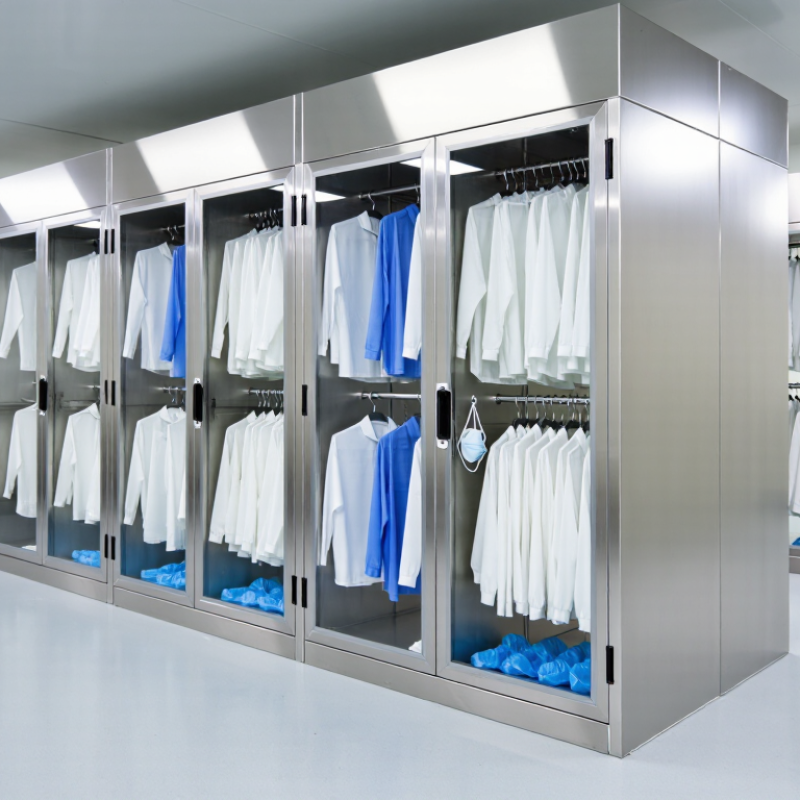
A cleanroom gowning cabinet is a dedicated storage unit for garments worn before entering a controlled environment. It is usually placed near a gowning area, where staff can reach coveralls, hoods, masks, gloves, and shoe covers without searching through general storage. Shelves, hanging rails, or separate compartments help keep items organized and reduce handling.
It is not a locker. Nor does it clean or sterilize clothing. The cabinet’s job is more practical: keep approved garments protected from dust, splashes, and unnecessary contact while making the gowning routine easier to follow. Smooth, non-shedding surfaces are often preferred because they can be wiped down. Details matter. A cabinet that is too crowded can make clean garments difficult to retrieve without touching nearby items.
Its design should match the site’s gowning procedure, garment types, and available space. Some facilities need separate sections for different garment sizes or stages of use; others need only simple, clearly labeled storage. It is easy to assume that a cabinet alone keeps garments clean, but that would be an overstatement. Cleaning schedules, careful handling, and staff training still matter. Even a well-designed cabinet can be awkward if doors block movement or shelves sit too high. The best choice is the one staff can use consistently.
| Topic | What It Means | Why It Matters |
|---|---|---|
| Definition | A cleanroom gowning cabinet is enclosed or compartmented storage designed to keep cleanroom garments and related supplies organized near a gowning area. | It gives personnel a designated place to access garments while helping keep them separate from ordinary clothing and unrelated items. |
| Typical contents | Depending on the facility, it may hold coveralls, frocks, hoods, face masks, gloves, shoe covers, and other approved gowning supplies. | Organizing supplies by garment type, size, or user can make the gowning process more consistent and reduce unnecessary handling. |
| Contamination control | A cabinet supports orderly storage, but it does not by itself clean, sterilize, or decontaminate garments. | Garments still need to be laundered, processed, packaged, and handled according to the facility’s procedures and cleanliness requirements. |
| Cabinet airflow | Some cabinets are passive storage units; others may include a designed filtration or airflow feature. The configuration varies by model. | Do not assume a cabinet is HEPA-filtered or maintains a particular cleanliness level unless its specifications and validation documentation confirm it. |
| Clean and used garments | Clean garments should be stored separately from used garments. Used items should go into designated containers or collection points. | Clear separation helps prevent mix-ups and reduces the risk of used garments contacting clean supplies. |
| Materials and surfaces | Cabinets may be made from stainless steel, coated metal, or other smooth, cleanable materials appropriate to the room and cleaning agents. | Choose surfaces that tolerate the facility’s cleaning routine and avoid designs with unnecessary ledges, gaps, or difficult-to-clean areas. |
| Location | Cabinets are commonly positioned in or near a gowning room, with access arranged to fit the facility’s personnel and material flow. | Good placement can support a clear sequence from personal clothing to cleanroom garments without obstructing doors, benches, or traffic routes. |
| Selection factors | Consider storage capacity, garment sizes, compartment layout, installation space, cleaning compatibility, and whether powered airflow is actually needed. | Matching the cabinet to the gowning procedure helps avoid overcrowding, unnecessary garment handling, and storage practices that conflict with site procedures. |
| Operating practice | Keep the cabinet clean and organized, follow a documented restocking method, and store garments in their intended packaging where required. | Consistent use makes supplies easier to inspect and helps personnel follow the same gowning process across shifts. |
| Cabinet vs. gowning room | The cabinet is one storage component; the gowning room is the controlled space where personnel change and follow gowning procedures. | A cabinet can support a gowning program, but it does not replace room controls, personnel training, cleaning procedures, or contamination monitoring. |
It is a storage unit near a gowning area. It keeps approved garments organized and protected from dust, splashes, and unnecessary handling.
No. It only stores them. Cleaning schedules, careful handling, and staff training still matter.
It can store coveralls, hoods, masks, goggles, gloves, boot covers, and sleeve covers. Small supplies may fit too.
Separate garment types and sizes on labeled shelves or in compartments. Keep clean stock apart from items awaiting laundering.
Keep them in their original packaging until use. Check packs for tears before placing them in the cabinet.
Smooth, non-shedding surfaces are easier to wipe down. Shelves, hanging rails, and clear sections can make garments easier to find.
No. A cabinet does not establish or certify a room’s classification. It can help keep garments off open benches and away from used items.
Clean garments may be harder to retrieve without touching nearby supplies. Access and airflow can suffer. Small details matter.
A quick weekly check can reveal dust, damaged packaging, or low stock. That routine may not catch everything, so staff still need to stay attentive.
A Cleanroom Gowning Cabinet is a dedicated storage unit that keeps protective garments and essential supplies organized near the point where personnel prepare to enter a controlled environment. By providing clearly arranged, enclosed storage, it helps reduce unnecessary handling, keeps garments off floors and other unsuitable surfaces, and supports a consistent gowning routine. Its contents may include cleanroom coveralls, hoods, masks, gloves, shoe covers, and other approved items needed for entry.
The cabinet should be installed in a convenient, appropriately controlled area along the gowning route, without obstructing movement or compromising the room’s workflow. Regular maintenance helps it remain clean and functional: remove dust and residue using suitable methods, inspect shelves, doors, and surfaces for damage, and replace worn components when needed. A well-placed and well-maintained cabinet can make gowning more orderly and help support contamination-control practices.